
Trust through velocity.
A collaborative design workflow helped Golden Living Centers move from paper-based operations toward an iPad application, while creating the visibility and momentum needed to improve an imperfect first release.
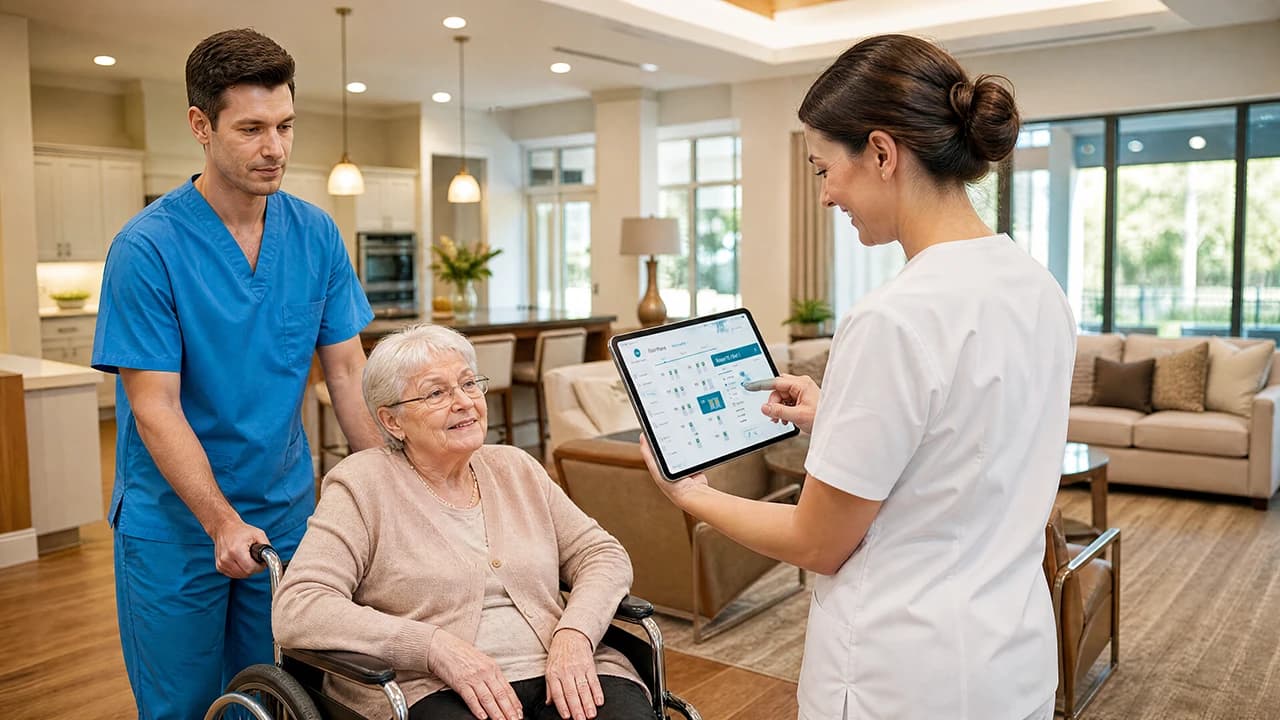
From whiteboards to a mobile workflow.
Golden Living Centers wanted to streamline patient check-in and room and bed assignments across its nationwide network of facilities.
Patient check-in and room assignments were part of a physical process involving caregivers, patients, rooms, and the unique layout of each facility.
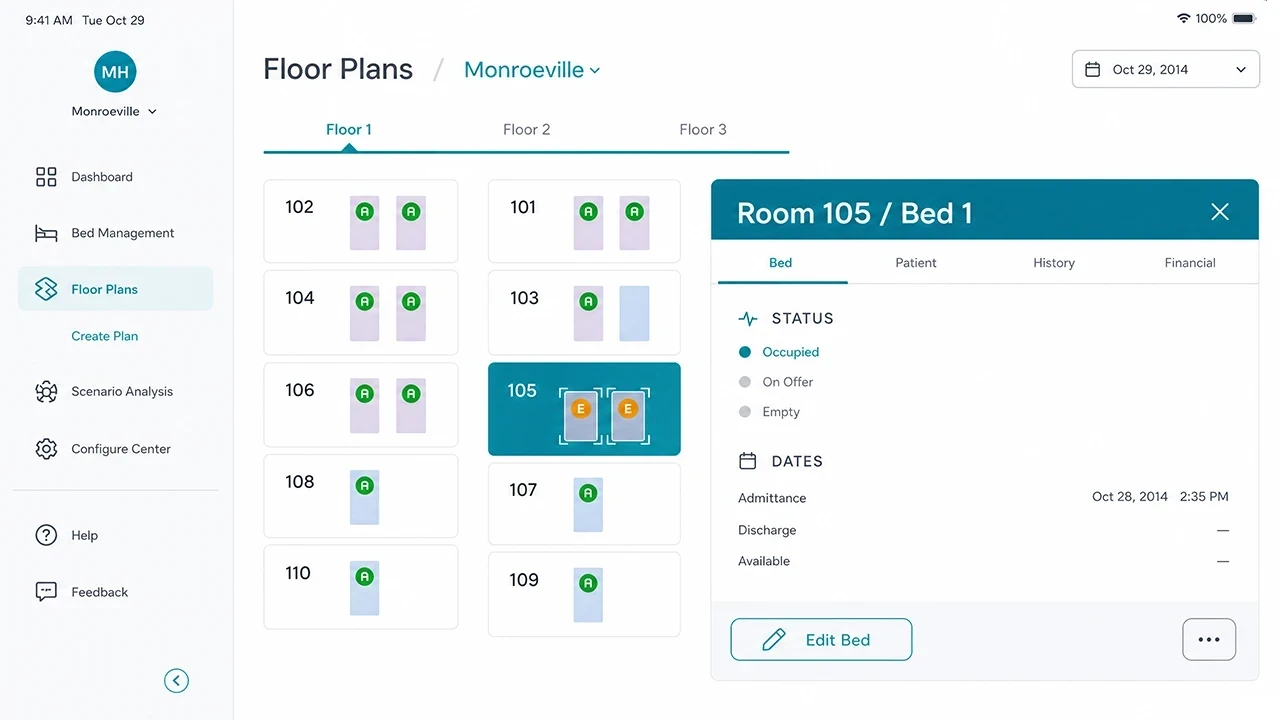
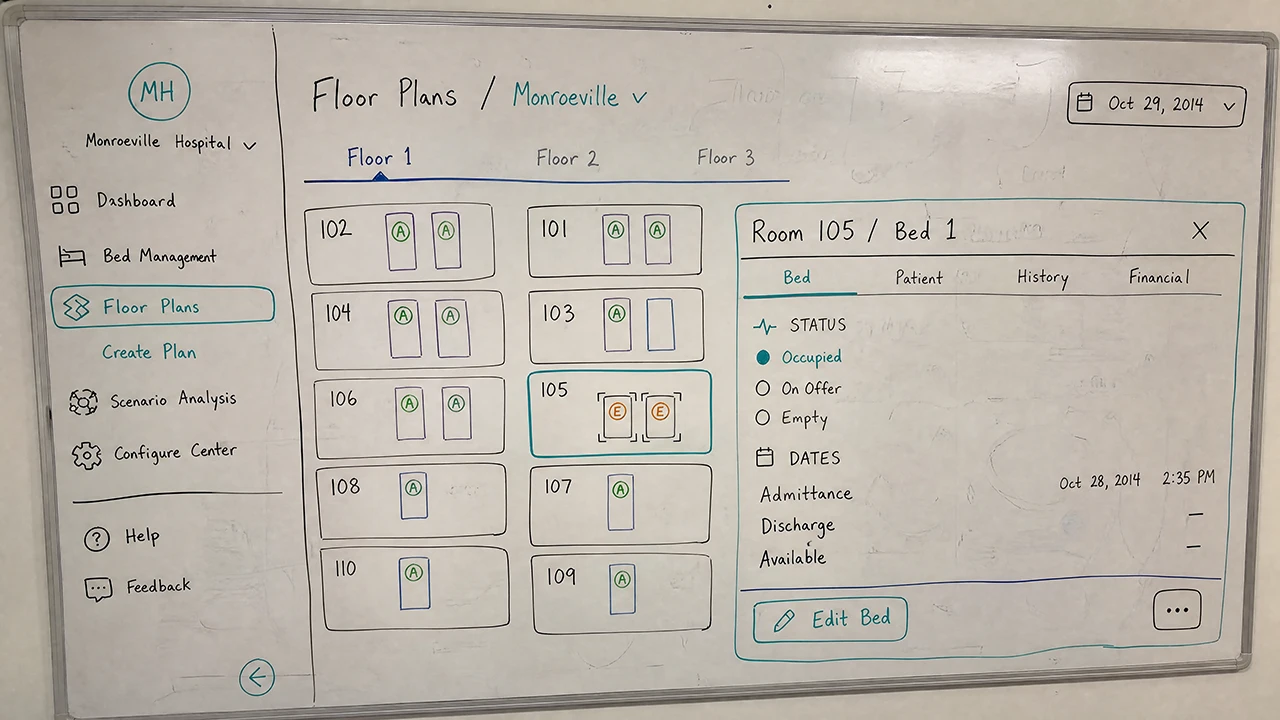
We also had limited time for comprehensive upfront research and requirements gathering. That meant we needed to make progress while continuing to learn.
Designing the product and the process.
As Director of Product Design & Engineering, I was responsible for translating product requirements and emerging research into the application’s experience and high-fidelity designs.
worked closely with Product Management on research, testing, and the ongoing refinement of the experience.
Because the product team was highly engaged in the details of the interface, I also developed a collaborative prototyping workflow that allowed us to explore ideas together before committing them to high-fidelity designs.
A digital tool for a physical process.
The application needed to work within the realities of caregiving, not just within the boundaries of a screen.
Patient check-in and room assignments were part of a physical process involving caregivers, patients, rooms, and the unique layout of each facility. The application needed to be useful to people who were active and mobile throughout their workday.
We also had limited time for comprehensive upfront research and requirements gathering. That meant we needed to make progress while continuing to learn, rather than assuming every requirement could be defined before design began.
A shared workspace for Product and Design.
Instead of asking the team to adapt to a rigid design process, I adapted the artifacts to the way the team worked.
The product managers were hands-on and interested in the details of the experience. Rather than treating that involvement as a bottleneck, I created a set of PowerPoint mockups that we could work on together.
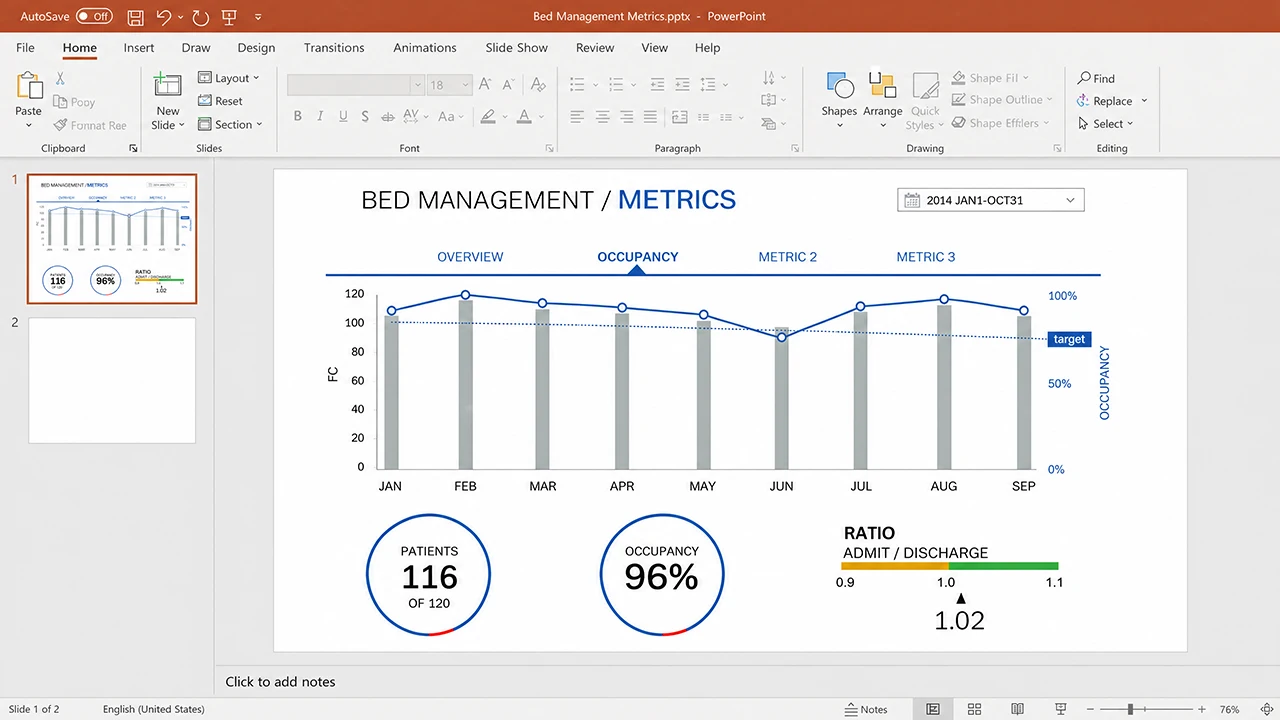
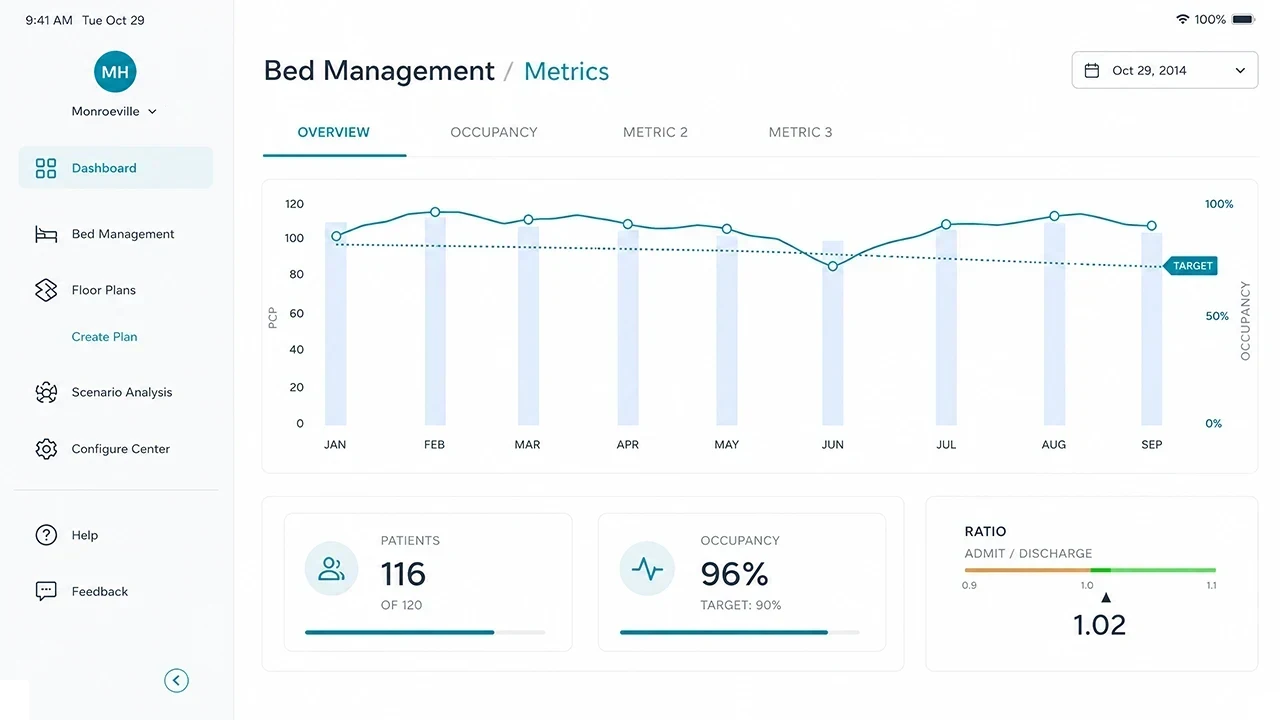
This was not a one-size-fits-all approach. It was a deliberate adaptation to the needs of the team: using a tool everyone could participate in to make decisions faster and maintain shared visibility.
The workflow also shortened the feedback loop. Instead of waiting for a formal handoff or polished design review, we could discuss an idea, capture it, and move it into the next iteration.
An iPad application for the facilities.
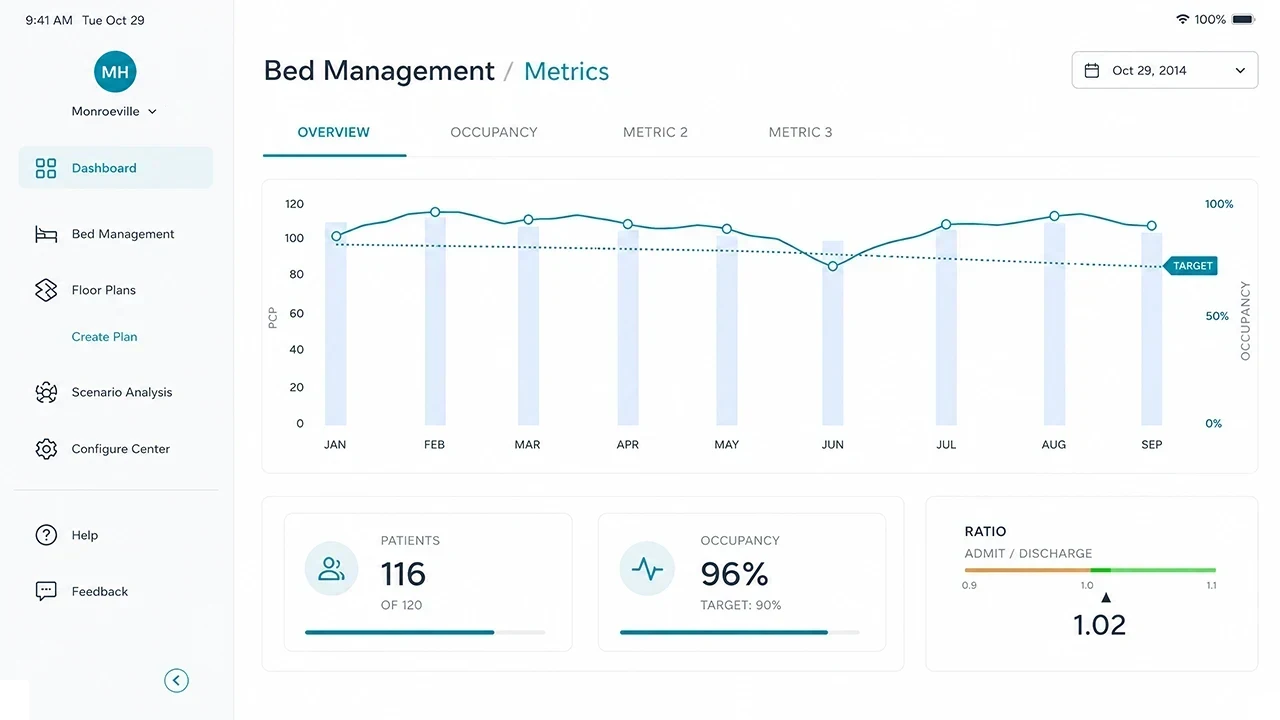
The resulting application brought patient check-in and room and bed assignment workflows into a digital format intended for use throughout the facility.
This was not a one-size-fits-all approach. It was a deliberate adaptation to the needs of the team: using a tool everyone could participate in to make decisions faster and maintain shared visibility.
The presentation layer design work focused on translating operational requirements into an interface that caregivers could use while moving between physical spaces.
The collaborative mockups and high-fidelity designs evolved together, allowing the team to refine the experience as new information became available.
The final experience
Selected screens from the room and bed assignment workflow.
Trust through velocity.
The first release was not as complete or refined as we wanted, but the speed and visibility of the process helped build confidence in the work.
Limited upfront research and requirements gathering meant that some needs were not fully understood before the initial version shipped. I would characterize that first release as a C+ rather than a finished success.
However, the client could see progress, participate in decisions, and watch feedback turn into improvements. Despite the shortcomings of the first release, the client remained engaged and continued investing in the application.
The project demonstrated that velocity can build trust when it is paired with transparency and a willingness to improve. A fast first release should be treated as the beginning of a learning process, not proof that the original assumptions were correct.
Adapt the process. Protect the discovery.
The collaborative workflow was effective for this team, but speed alone could not replace the research needed to make the first release stronger.
I would use a similar collaborative approach again when it suited the people and the project. It reduced friction between Product and Design and made it easier to incorporate new ideas.
What I would change is the balance between delivery speed and upfront discovery. A more robust research and requirements-gathering phase would likely have helped us identify important needs earlier and improve the quality of the first release.
The lesson was not that speed should replace research. It was that the design process should adapt to the team, while still protecting the discovery work needed to make good decisions.