
Sketch an idea. Give it dimension.
PadPixa is an experimental exploration of a creative workspace where sketches and written direction inform an evolving 3D model. The project brings together my work in UX, engineering, and my studies in AI at Harvard.
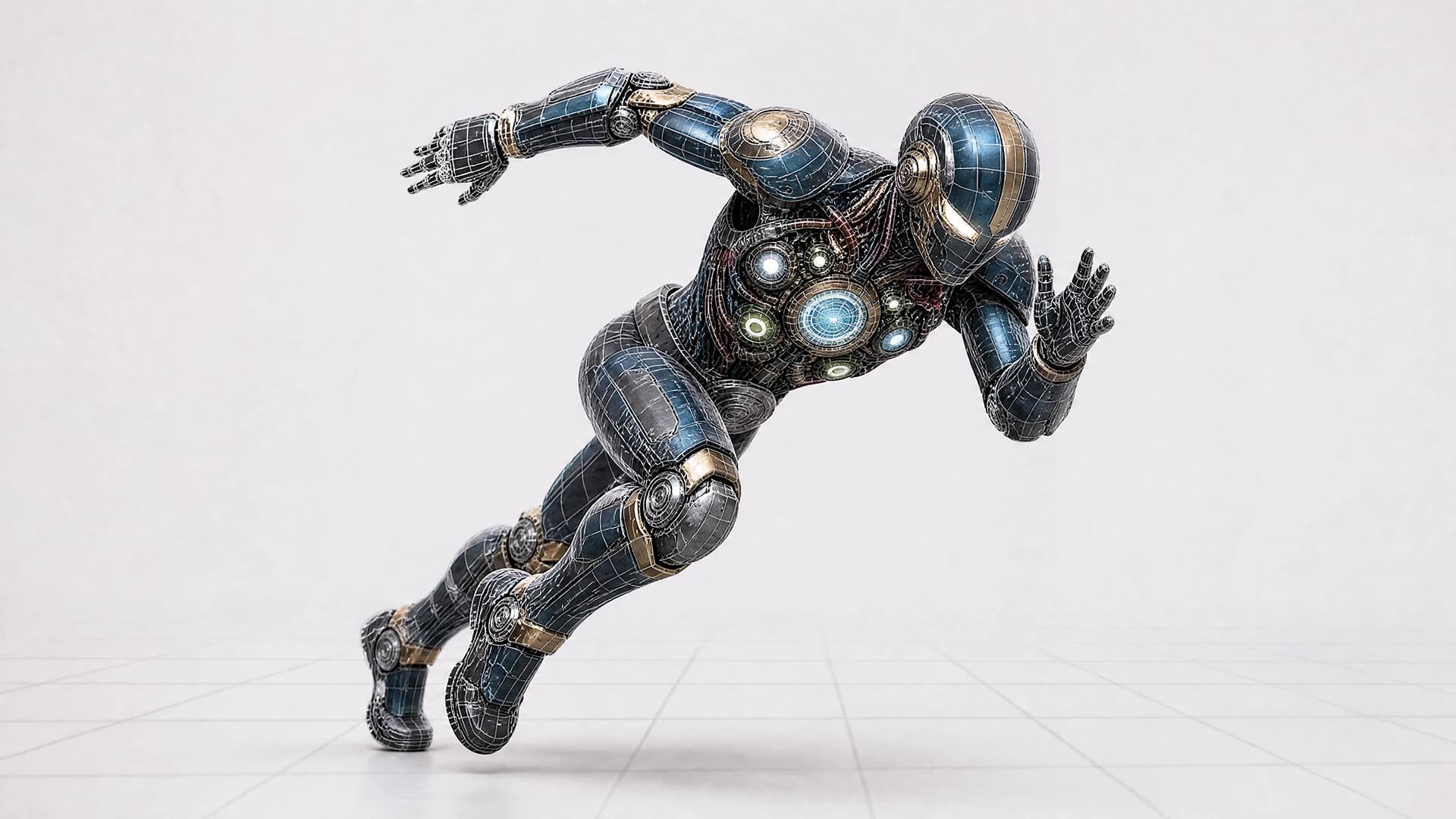
A model that develops with the idea.
Game development costs have exploded in recent years making it a very risky endeavor, fully automated AI workflows produce poor results.
so what if we enhanced the human artists creativity and sped up production ready digital assets? What if a 3D model could begin taking shape while you were still sketching and describing what you wanted to make? PadPixa explores a workspace where drawing and writing become complementary ways to direct a developing 3D asset. A sketch communicates form and visual character, while written notes clarify details that are difficult to express through drawing alone.
The intended experience is iterative: sketch, describe, inspect, and refine. As the creator develops the idea, the system would use that evolving input to update its interpretation and the resulting model.
This is an active research and design project. The interface presents a direction I am investigating, rather than a finished product or a validated promise of real-time generation.
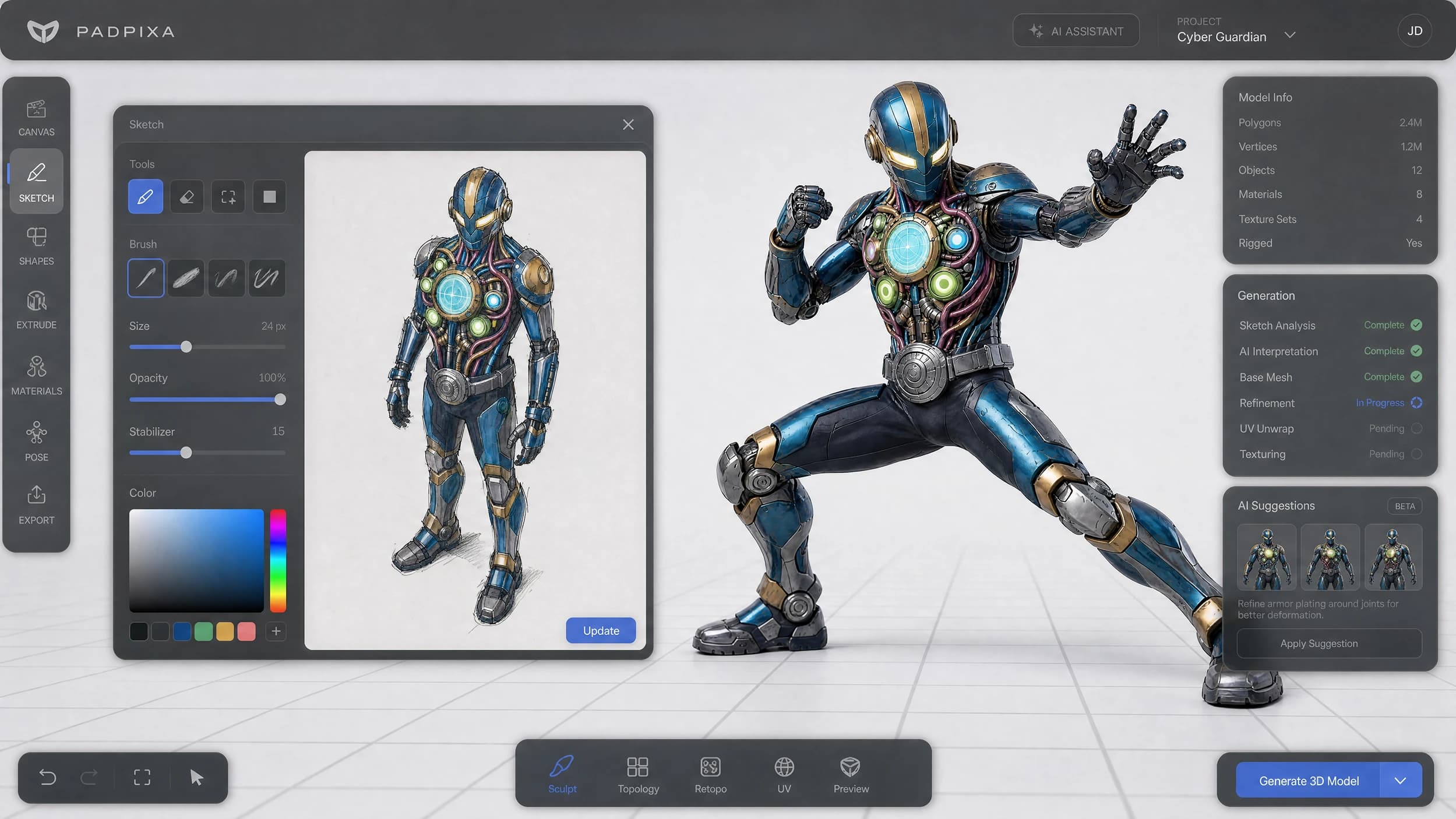
Designing across the interface and the system.
I am exploring the product concept, interaction design, and technical approach together, using each to inform the others.
The work includes defining the creative workflow, developing interface concepts, and investigating how multiple AI capabilities might support a connected sketch-to-3D experience.
My studies at Harvard include AI, neural networks, convolutional neural networks, and the mathematics and algorithms behind them. That technical foundation expands the questions I can ask as a UX designer.
I can consider how a person expresses an idea alongside how a system represents, interprets, and transforms that input. PadPixa gives me a place to connect those studies with my experience designing and engineering products.
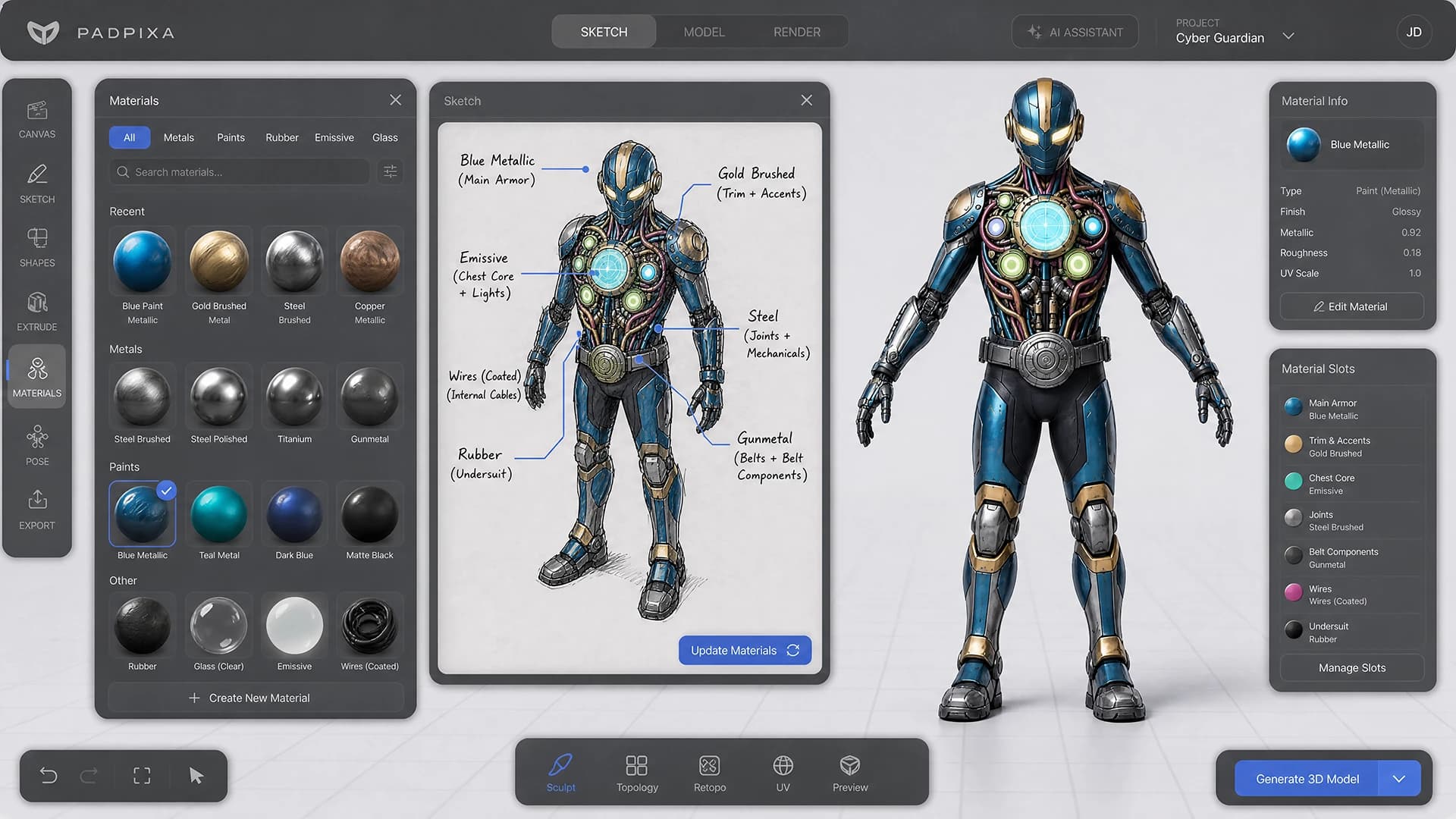
Keep the creator’s intent intact.
A compelling generated object is only useful if it reflects what the creator was trying to make.
A sketch leaves room for interpretation. It may suggest a silhouette without defining depth, show a character from only one angle, or omit details that the artist already has in mind.
Written direction can help resolve those gaps, but it introduces another design question: how should the system respond when the drawing, notes, and existing model suggest different things?
The central challenge is preserving intent through successive transformations. A creator needs ways to recognize an incorrect interpretation, correct it, and retain the parts that already work.
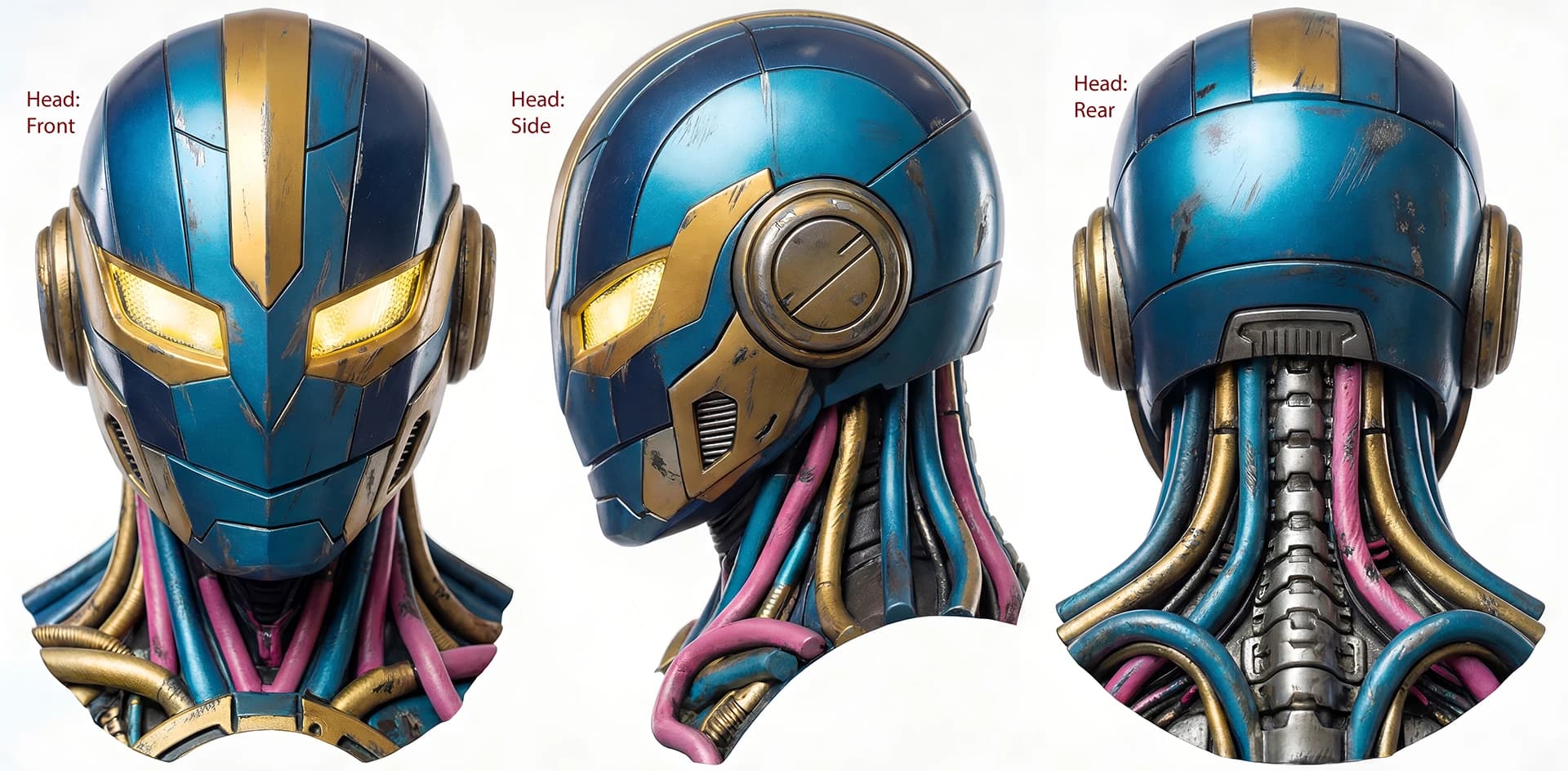
Draw. Describe. Inspect. Refine.
The concept keeps the sketch and its 3D interpretation in a shared workspace so the creator can move between intention and result.
Drawing establishes the initial visual direction. Notes can describe proportions, materials, or details that are not obvious from the sketch. The proposed workflow uses both forms of input to guide the developing model.
The creator would inspect the result, revise the drawing or description, and request another interpretation. The interaction should make it clear which changes are being applied and which parts of the current result will be preserved.
An important open question is when updates should happen. Automatic updates could make the experience feel responsive, while explicit update controls could give creators more predictability. Finding that balance is part of the research.
Coordinate the complexity behind the canvas.
The technical direction combines multiple AI capabilities behind a single creative workflow.
I am investigating an approach that combines open-source models, targeted adaptation, and reference-guided generation to translate sketches and written direction into 3D form.
The specific model choices and implementation are evolving. The product direction is to let creators work through familiar actions while the system coordinates the intermediate processing.
That processing still needs to be understandable at the interface level. Creators should know when a result is being updated, when their input needs clarification, and when an interpretation is ready to review.
What would make this useful in practice?
The next stage needs to examine both the quality of the generated assets and the creator’s ability to direct them.
Intent preservation: how closely does the result follow the defining features of a sketch and its accompanying notes?
Revision control: can a creator change one feature without losing details they have already accepted?
Feedback and timing: how should the workspace respond while generation is running, especially if the creator continues drawing?
Asset usefulness: what additional work would a generated model require before it could support the creator’s intended use?
These are research priorities, not demonstrated outcomes. They will help determine whether the concept can support a useful creative workflow beyond an appealing initial result.
An evolving concept.
PadPixa remains an experimental product and technical research project.
The current work establishes the intended experience and the questions that need to be resolved. The interface concept provides a way to make those ideas concrete and examine how drawing, written direction, model review, and generation feedback could work together.
The next steps are to test the underlying transformations, refine the interaction around their actual capabilities and limitations, and evaluate the workflow with potential users.
I am not presenting production-readiness, validated usability results, or measured performance gains at this stage. Those outcomes still need to be established through implementation and testing.
Technical understanding shapes the questions.
PadPixa reflects how I want to bring UX practice, engineering experience, and academic study into the same design process.
Studying neural networks and their mathematical foundations helps me look beyond the interface to the assumptions and transformations underneath it. That understanding informs what I explore, what I question, and what needs to be tested.
The value of that foundation is in making better product decisions: knowing where to give the creator control, where to communicate uncertainty, and where an attractive interaction may depend on a capability that is not yet reliable.
The question I’m exploring is how AI can help an idea take shape while keeping the creator in control.